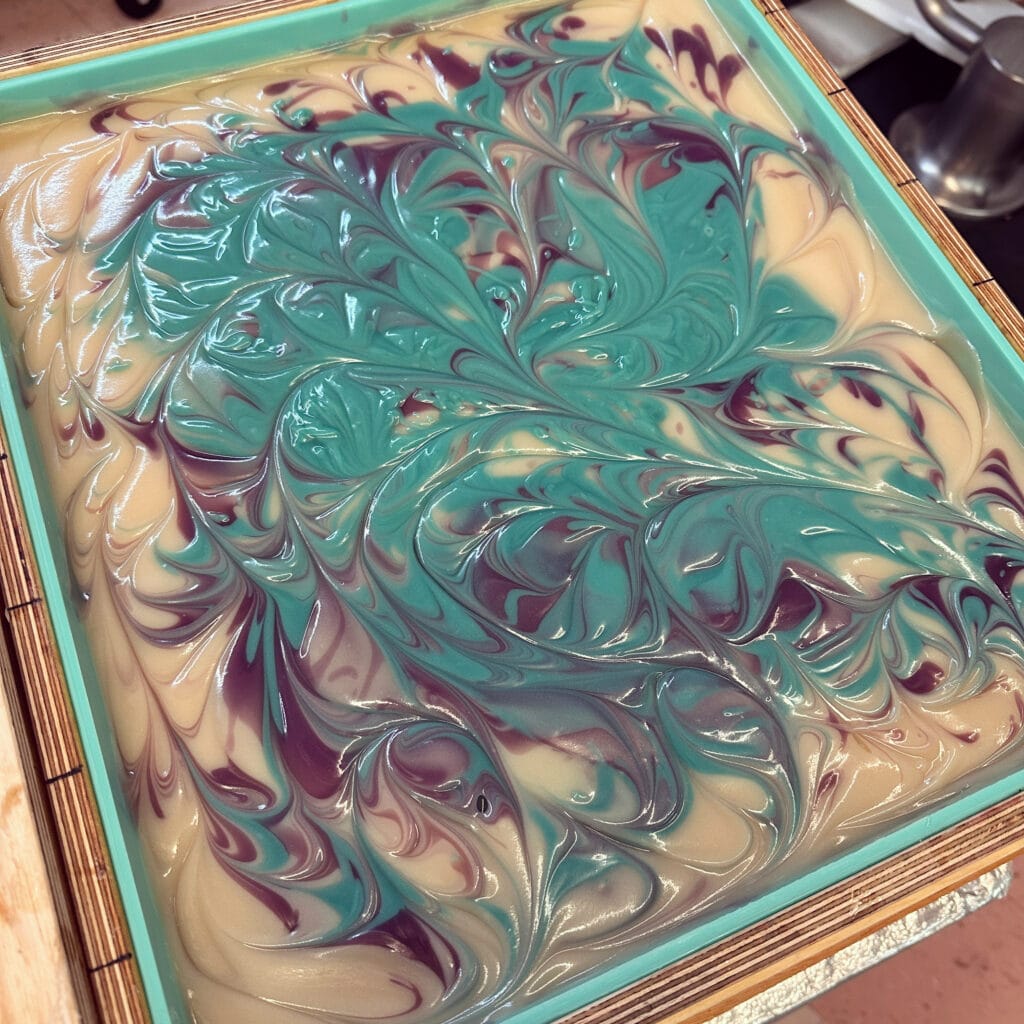
nbspnbspnbsp MidAugust Alreadynbsp Tomatoes Are Filling My Garden And Yesterday I Found A Hidden Zucchini That Was Nea Mid-August already! Tomatoes are filling my garden and yesterday I found a hidden zucchini that was nearly as big as Bullit, our resident daschund. Summer means lots of arts and craft shows for me and I've been on the road for the past month peddling my wares at various festivals around the Northwest. I'm always so gratified to have someone come skidding into my booth at a fair saying,. "Thank god you're here! I was down to my last little sliver!" Seems that good quality soap can be habit forming. I want to take a moment to talk about glycerin soaps.....you know, those transparent brightly colored slabs of soap with all the cutsie little chunks or swirls inside. Glycerin is a by-product of commercial soapmaking and is sold by the bucket to wannabe soapmakers. Sadly, glycerin is NOT soap and frankly, it kind of gives handmade soap a bad name. The nature of glycerin is that attracts moisture, which makes it useful as an additive in creams and lotions and soaps. It pulls a little moisture from the air, and gives the soap or lotion a slippery feel. Unfortunately, because the nature of glycerin is that it attracts moisture, it will get that moisture even if it has to take it right out of your skin, which it does. Ever notice how a bar of glycerin soap gets all cloudy and beads up with water droplets when it sits on the sink for a day or two? It's absorbing moisture from the air just like it's supposed to. And in the same way it will take moisture from your skin when you wash with it. Also, glycerin soaps tend to melt away quickly which is definitely not the case with real handmade soap. Making glycerin soap is terribly complicated. You buy a bucket or a block of solid glycerin, hack off a few chunks, zap it in the microwave, add a few drops of color and fragrance, pour it in a plastic mold and it's ready to use in half an hour. Real soap starts with raw ingredients; coconut oil, palm oil, olive oil, shea butter. The melted fats and oils are then mixed with caustic soda, otherwise known as lye. Don't be fooled into thinking that just because something contains an ingredient as nasty as lye it can't possibly be good for your skin! Lye is what causes all those fats and oils to transform themselves into soap. The quality of a soap is determined by the quality of the fats and oils that go into it. I use nearly 30% olive oil in my soaps to ensure that they are never drying. And incidentally, handmade REAL soap naturally contains about 11% glycerin. No need to add more. So there you have it...my rant about glycerin "soaps." To me, it's kind of like buying frozen bread dough and telling me you're a baker.
|
|